Tokaji Aszú: the wine European kings called “the wine of kings”
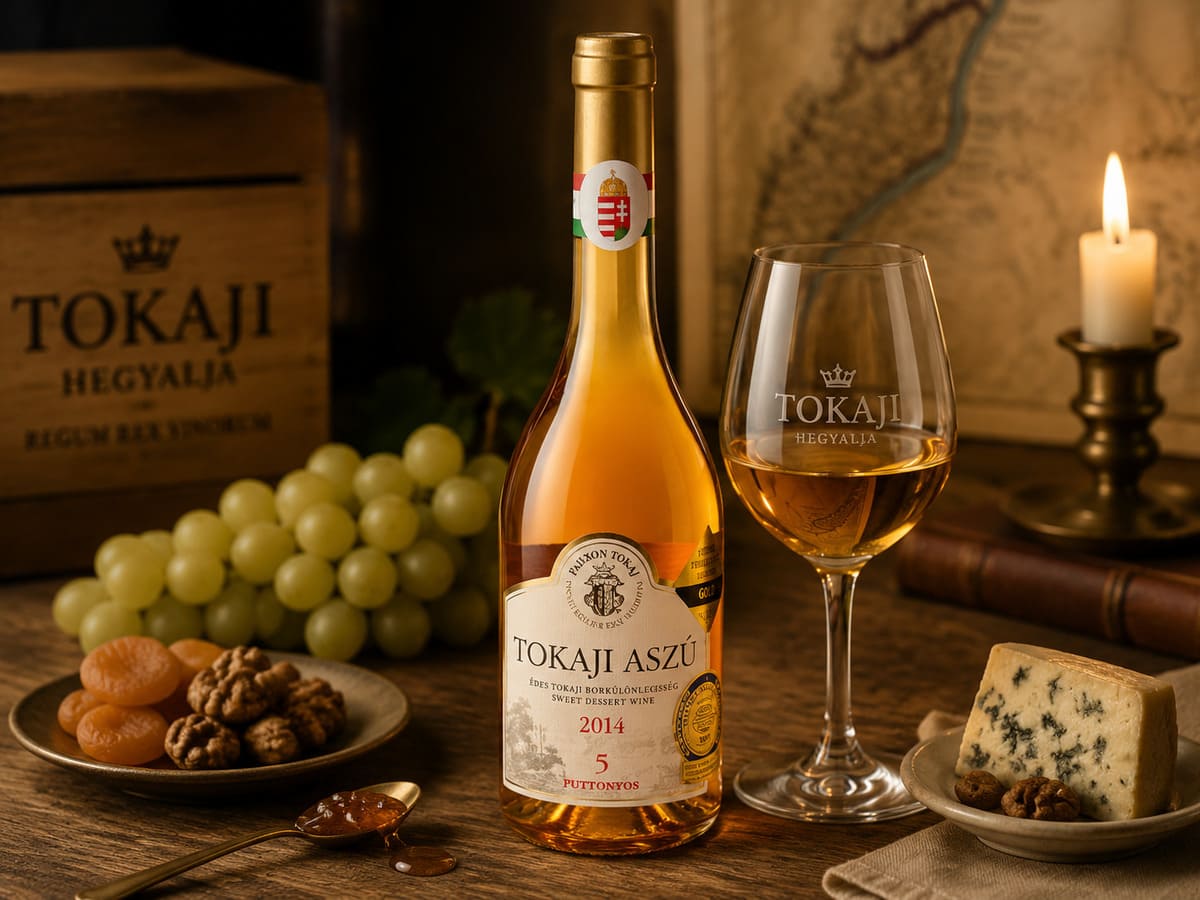
There are famous wines. And then there are legendary wines. Tokaji Aszú belongs to the second category: it is one of the few wines in the world that can claim to have been served at the table of Louis XIV of France, praised by Voltaire, Goethe and Beethoven, and backed by a history that dates back to the 16th century. And yet, in Spain, it is still almost unknown.
At El Gourmet Shop, we have it. And if you have not tried it yet, this article is the best place to start.
An origin born from accident and war
The history of Tokaji Aszú is part legend and part necessity. Around 1530, tensions between Hungarians and Turks forced the harvest in the Tokaj region to be delayed until well into autumn. During that time, the grape clusters were exposed to a fungus normally considered a problem: Botrytis cinerea, known as noble rot.
What seemed like a disaster turned out to be a miracle. The grapes affected by botrytis had lost much of their water, concentrating sugars, acids and aromas in a way completely different from any healthy grape. A winegrower decided to make wine from them by mixing them with fresh must, and the result was an extraordinarily sweet, complex wine with unprecedented ageing potential.
That is how Tokaji Aszú was born. A wine that was not sought out, but changed the history of European winemaking.
The wine of kings: a reputation earned over centuries
The phrase “Vinum Regum, Rex Vinorum” — the wine of kings, the king of wines — is attributed to Polish King John III Sobieski, although the expression circulated throughout European courts during the 17th and 18th centuries. Tokaji Aszú was a wine of state: it was given to monarchs, served during diplomatic negotiations and stored in the royal cellars of half of Europe.
It was not a whim. It was recognition of its singularity: no other wine in the world had that balance between extreme sweetness and vibrant acidity, that ability to age for decades in the bottle while improving over time, that complexity which tasters of the period could not explain but all recognised as something unique.
Figures such as Voltaire, Goethe, Beethoven and Schubert mentioned it in their writings. Tsar Peter the Great even stationed a permanent military guard in the vineyards of Tokaj to secure his supply. Pope Pius IV also received it as a diplomatic gift on more than one occasion.
What exactly is Tokaji Aszú?
Tokaji Aszú is a sweet wine from the Tokaj-Hegyalja region, in north-eastern Hungary, made from grapes affected by botrytis cinerea. The region has been a UNESCO World Heritage Site since 2002, a recognition of both its landscape and its winemaking tradition of more than 500 years.
The main grapes are three native Hungarian varieties:
- Furmint: The base and predominant grape. It provides the structure, vibrant acidity and ageing potential that define Tokaji.
- Hárslevelű: It softens the whole and adds floral and spicy notes.
- Sárgamuskotály (Muscat): It brings freshness and fruity aromas.
The production process is one of the most labour-intensive in the world of wine. The botrytised grapes — called aszú — are selected berry by berry, by hand, separating them from the rest of the harvest. This paste of noble grapes is then macerated with must or base wine for up to 36 hours. The mixture is pressed and undergoes oxidative ageing in Hungarian oak barrels for a minimum of three years before being released onto the market.
The Puttonyos system: how to understand the sweetness
If you have seen Tokaji bottles with numbers such as “3 Puttonyos”, “5 Puttonyos” or “6 Puttonyos”, now you will understand what they mean.
The puttony was originally a wooden basket of about 25 kg used by harvesters to carry aszú grapes. The number of baskets added to each standard 136-litre barrel determined the sweetness and concentration of the final wine. More baskets meant more botrytised grapes, more sweetness and more complexity.
- 3 Puttonyos: The lightest and most accessible. Sweet but with marked fresh acidity. An excellent entry point for those who do not know Tokaji. Notes of yellow fruit, honey and flowers.
- 5 Puttonyos: The perfect balance. More concentrated, with remarkable aromatic complexity: candied apricot, orange, acacia honey, vanilla and a spicy touch. The version most appreciated by connoisseurs.
- 6 Puttonyos: The most intense expression of Aszú. Produced only in the best vintages. Dense, unctuous, with acidity that balances the sweetness and extraordinary longevity. For very special occasions.
There is also Tokaji Eszencia, made only from the juice that runs by gravity from the aszú grapes, without any pressing. It is so concentrated that it barely ferments, can age for decades and is considered one of the most extraordinary wines in the world. It is produced in tiny quantities and its price reflects that rarity.
How to serve and enjoy Tokaji Aszú
Tokaji is not a wine to be drunk just any way. A few basic details make the difference between drinking it well and drinking it extraordinarily well:
- Temperature: Between 10 and 12 °C. Slightly cooler than room temperature, but never ice cold. Cold blocks its more complex aromas.
- Glass: A medium-sized white wine glass, with enough opening to perceive the aromas. You do not need a special glass, but avoid small tumblers.
- Quantity: Serve in small portions, between 5 and 8 cl. It is a tasting wine, not a wine for fast drinking.
- Moment: As an aperitif, as an accompaniment to specific dishes or as a dessert wine. It is also perfect on its own, in silence, paying attention to every sip.
Pairings that do justice to Tokaji
Tokaji Aszú has enough acidity to avoid becoming cloying, which makes it more versatile than it may seem. These are the combinations that work best:
- Hungarian goose foie gras: The classic pairing par excellence. The fat of the foie and the acidity of Tokaji balance each other perfectly. A combination that has been served for centuries on the most refined Hungarian tables.
- Blue cheese (Roquefort, Gorgonzola): The intense saltiness of the cheese and the sweetness of the wine create one of those contrasts that stay in the memory.
- Yellow fruit tarts or desserts with apricot and peach: The wine amplifies the same aromas it already contains.
- On its own, as a digestif: A good-vintage 5 Puttonyos needs nothing else. Just a glass, a quiet moment and attention.
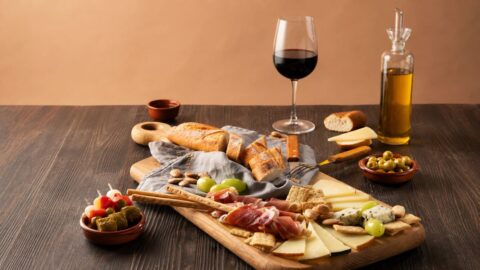
- With Iberian ham: An unexpected but surprising pairing. The sweetness of the wine and the saltiness of the ham work like peach with Serrano ham, but with much more elegance.
The Spanish connection with Tokaji
There is one detail few people know that directly connects Tokaji with Spain: the Oremus winery, one of the most prestigious in the region, has belonged since 1993 to the Álvarez family, owners of Vega Sicilia. In other words, the family behind Spain’s most iconic wine decided to invest in Tokaj because they recognised in that terroir something that did not exist anywhere else in the world.
That connection is not anecdotal: it proves that great wine experts have known for decades what most Spanish consumers have still not discovered.
Where to buy Tokaji Aszú in Spain
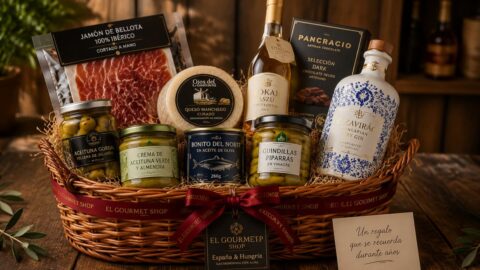
Tokaji Aszú is not easy to find in Spain. Large retailers do not usually stock it, and general wine shops often offer a very limited selection without context. At El Gourmet Shop, we select it with the same criteria we apply to all our Hungarian products: artisanal producers, vintages with history and quality we have verified ourselves.
If you are going to try it for the first time, we recommend starting with a 5 Puttonyos: this is where Tokaji shows its full potential without reaching the extreme intensity of the 6. And if you already know it, ask us about the available vintages.
See selection of Hungarian wines
Conclusion: a wine that changes your perspective
There are few experiences in the world of wine as transformative as tasting a good Tokaji Aszú for the first time. Not because it is the most expensive or the most technical wine, but because it opens a door to a tradition that has fascinated Europe’s most demanding palates for five centuries.
If kings kept it in their cellars, great composers mentioned it in their letters and UNESCO declared its region a World Heritage Site, there must be something special about it. We invite you to discover it.