
Iberian ham vs. Serrano ham: how do they really differ?
Last modified:
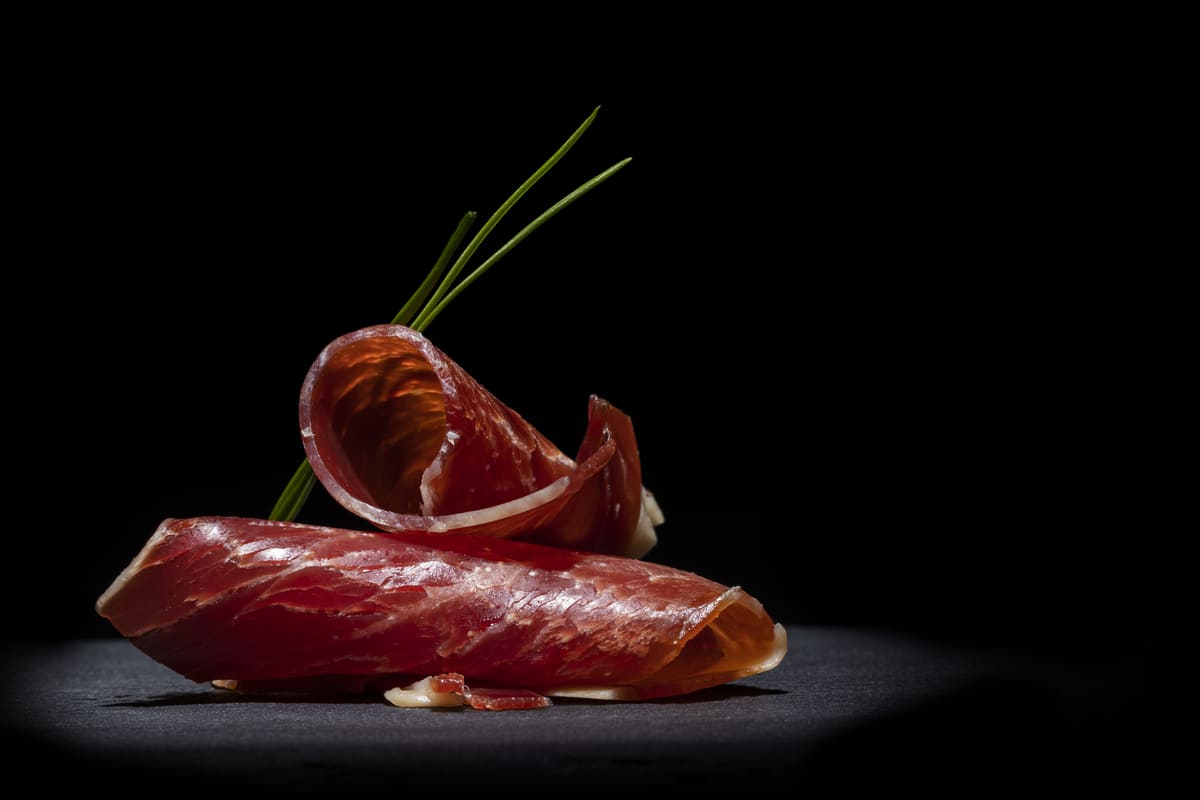
At first glance, Iberian ham and Serrano ham may seem similar, but behind each of them lie profound differences that directly influence their flavor, texture, quality and price. Knowing these particularities not only helps to better value each product, but also to choose with criteria depending on what you are looking for: a gourmet treat or a tasty and affordable option.
In this article we explain the key differences between both types of ham, from its origin to its curing process, so that you can decide which is the one that best suits you.
1. Origin: two races, two worlds
The main difference lies in the type of pig they come from. Serrano ham is made from white breeds of pigs such as Duroc, Landrace or Large White, usually raised on conventional farms.
Iberian ham, on the other hand, comes from the Iberian pig, a breed native to the Iberian Peninsula that stands out for its ability to infiltrate fat into the muscle. This intramuscular fat is responsible for the characteristic marbling and its juicy and tasty texture.
2. Diet and lifestyle
Another essential aspect is how the animals are raised and fed. The white pigs that give rise to Serrano ham are usually fed with industrial feed, in more controlled environments.
In the case of Iberian ham, breeding may vary according to the category, but in the best cases -such as acorn-fed Iberian ham- the pigs are raised in the wild in pastures and feed on acorns during the “montanera” period. This gives the ham a much more complex flavor and aroma, with sweet notes and nuances that can only be achieved with this type of natural feeding.
3. Healing: time and patience
Curing time makes another big difference. A Serrano ham can be ready in 9 to 16 months, while an Iberian ham needs at least 24 months, and in the most premium cases it can reach 3 or even 4 years of curing.
This slow process allows the product to gain complexity, develop deeper aromas and a much more melting texture. That’s why Iberian ham not only tastes different: it feels different in the mouth.
4. Appearance, texture and flavor
Visually, Iberian ham tends to have a darker color, a natural shine in its fat and more marbled meat. Its texture is silky, thanks to fat infiltration, and its flavor is elegant, long and full of nuances.
Serrano ham, on the other hand, has leaner meat, with a lighter tone and a somewhat firmer texture. Its flavor is direct, salty and very pleasant, ideal for daily consumption or for recipes.
5. Price and prestige
Differences in breed, feed and curing are also reflected in the price. While a gran reserva Serrano ham can cost around 100-150 €, a 100% acorn-fed Iberian ham can easily exceed 400 €, and even more if we are talking about limited edition pieces.
This does not mean that one is better than the other in all contexts, but rather that they respond to different profiles: Serrano offers versatility and good flavor at an affordable price, while Iberico is reserved for special occasions and for those seeking a gourmet experience.
6. Informative labels
In Spain, Iberian ham has specific labeling regulations that classify products by color according to their racial purity and nutrition:
- 🟢 Green: field baiting
- ⚪ White: bait
- 🔴 Red: Iberian acorn (crossbreed)
- ⚫ Negra: 100% Iberian acorns
Serrano ham can also be classified as Bodega, Reserva or Gran Reserva, depending on the curing time, although it is not regulated in as much detail as Iberian ham.
The choice between Iberian ham and Serrano ham is not simply a question of price, but of taste, occasions and expectations. Both have their place in Spanish gastronomy: the Serrano, for its accessibility and traditional flavor; the Iberian, for its depth, texture and prestige.
If you are preparing a charcuterie board or looking for a gourmet gift, knowing these differences will allow you to choose wisely and enjoy every bite to the fullest.